
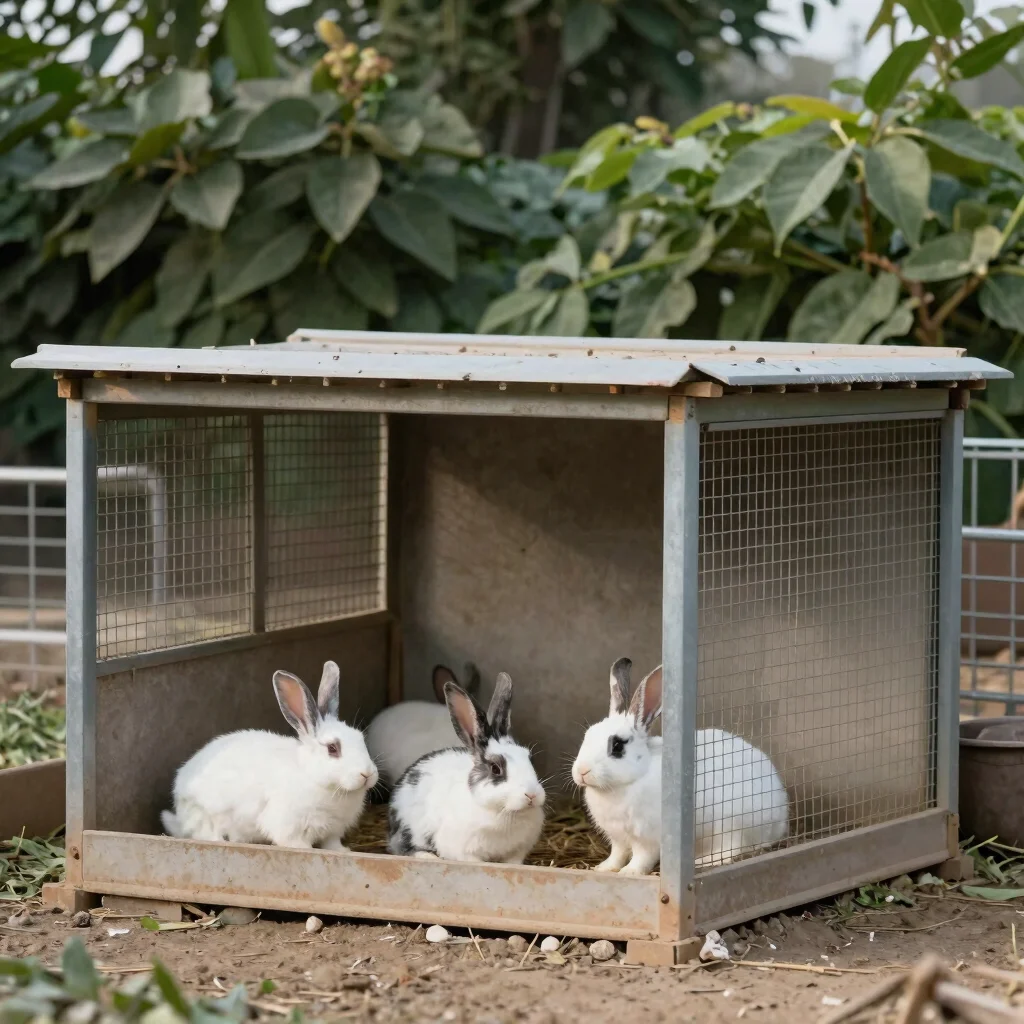
A tin roof in direct afternoon sun can make an otherwise tidy rabbit house difficult to manage. Across Pakistan, heat, humidity, and seasonal conditions vary by region, so housing decisions should begin with the farm’s own climate and daily exposure—not a copied plan.
Start With Shade and Airflow
Choose a shaded location and consider how the roof, walls, and surrounding structures hold or reflect heat. Allow air to move through the housing while protecting rabbits from harsh weather and strong direct drafts. Check the setup at different times of day, especially during the hottest part of the afternoon.
Make Daily Checks Routine
Look at the rabbits, not just the thermometer: note whether they seem unusually quiet, uncomfortable, or reluctant to eat or drink. Keep clean water accessible and check that containers are working and remain clean. If an animal shows concerning signs, seek advice from a veterinarian rather than relying on a housing adjustment alone.
Fit the Design to Your Farm
A setup in a humid coastal area may need different attention from one in a dry inland district, and locally available materials can behave differently under sun and rain. Before expanding, observe temperatures and airflow in the proposed space through the day and across changing seasons. Good housing is not one fixed blueprint; it is a practical arrangement you can inspect, maintain, and improve.